Business Security Camera Installation Phoenix: Complete Guide
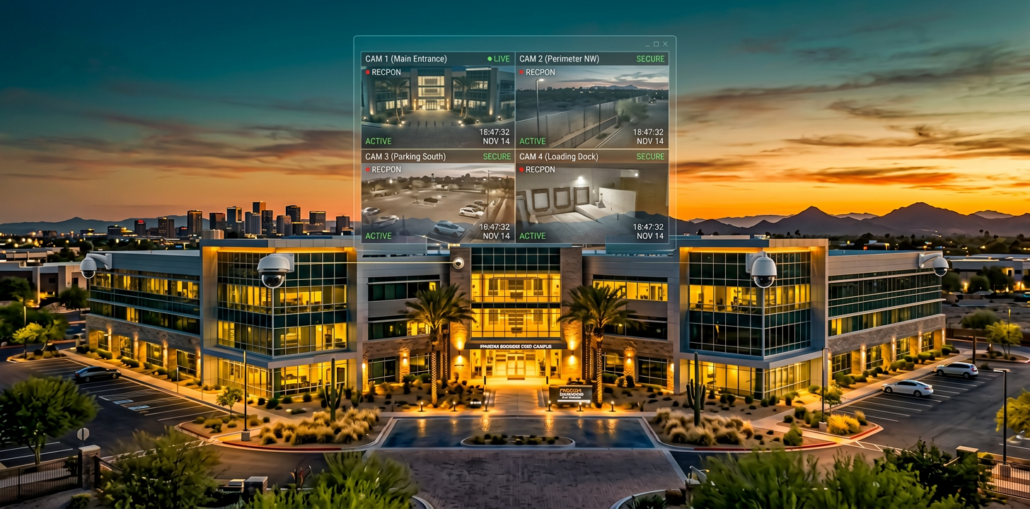
Businesses in Phoenix face unique security challenges, from storefront theft to after-hours vandalism and the need to meet compliance obligations in regulated industries. Installing the right camera system protects people and assets, deters crime, and gives managers the evidence they need to act fast when incidents happen. In this guide you will learn how to plan, select, and install a system that fits Arizona climates and business needs.
When you begin planning, keep in mind the local environment, existing network infrastructure, and how video will be stored and accessed. For many local companies, partnering with a full-service provider that handles cameras, networks, backups, and compliance is the fastest way to get reliable results. Below we cover everything from camera types to integration with managed IT services and business phone systems.
Business Security Camera Installation Phoenix: What To Know
Why commercial camera systems matter for Phoenix businesses
Security cameras do more than record. They reduce shrink, speed incident resolution, and can lower insurance premiums. For healthcare, dental, and regulated offices, cameras also help satisfy audit and compliance requirements. When you pair surveillance with strong network security and backups, you protect both physical and digital assets.
Key planning questions before installation
- What do you need to monitor, and at what resolution? High-risk zones like entrances and cash registers often need higher resolution.
- Will cameras be indoors, outdoors, or both? Outdoor cameras must handle heat, dust, and sudden storms common in Phoenix.
- How long must footage be retained for investigations or compliance? Retention affects storage and cost.
- How will video be accessed remotely, and who has permissions? Proper role-based access keeps recordings secure.
Choosing the right cameras and hardware
Camera types and where to use them
- Dome cameras, great for indoor ceilings, offer wide coverage and a discreet profile.
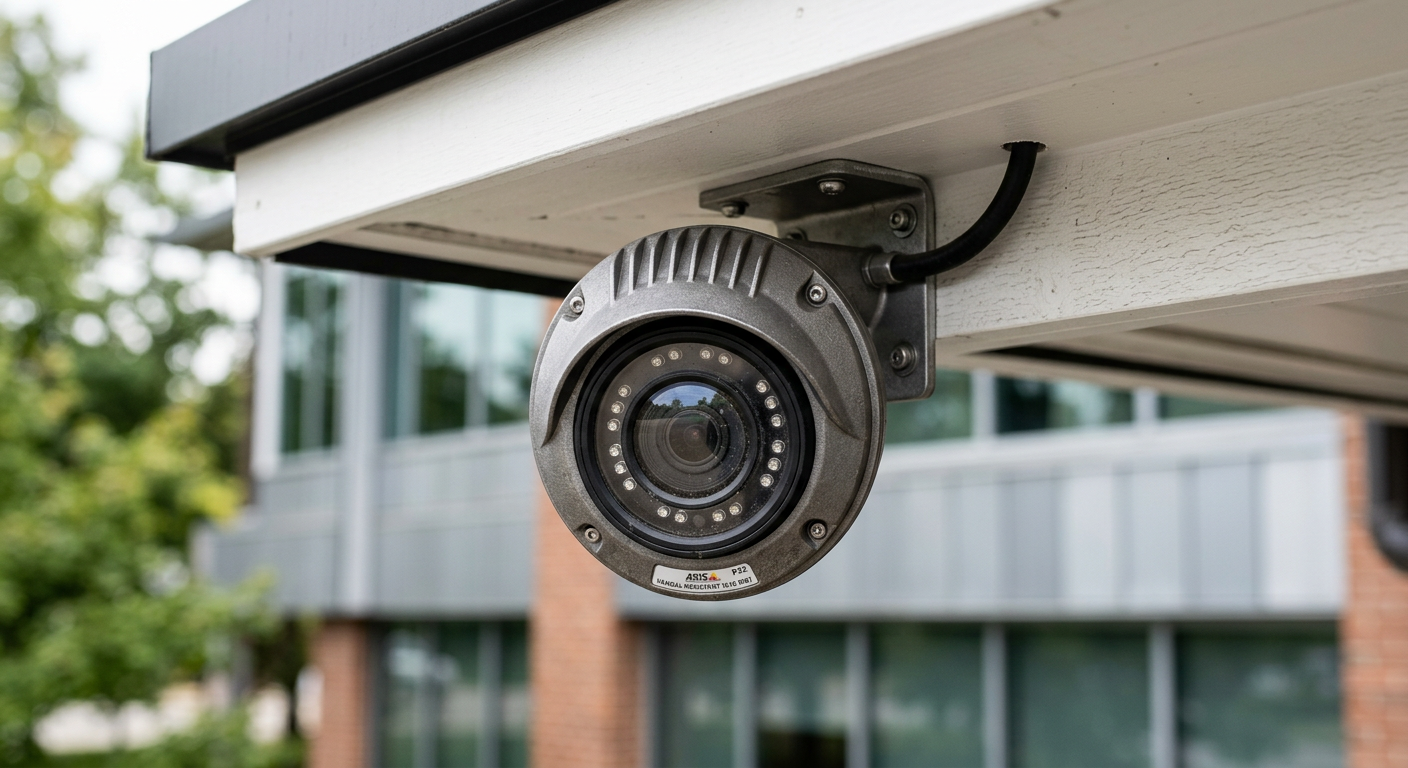
- Bullet cameras are ideal for outdoor sightlines, with visible deterrence and long-range lenses.
- PTZ cameras allow pan, tilt, and zoom for active monitoring of large lots or warehouses.
- Fixed varifocal cameras let you adjust field of view during setup for precise framing.
Resolution, frame rate, and low-light performance
Higher resolution gives clearer evidence, but it increases bandwidth and storage needs. For most businesses, 4 MP to 8 MP cameras balance clarity and cost. Choose cameras with good low-light or infrared performance for night monitoring, and consider WDR for challenging lighting near entrances.
Environmental and mounting considerations for Phoenix
Make sure outdoor cameras have an IP66 or higher rating for dust and occasional monsoon rain. Heat-rated components and sun shields extend lifespan. Proper mounting locations include under eaves, on sturdy poles, and at strategic heights to avoid tampering.
Network, storage, and integration
On-premises vs cloud storage
On-premises NVRs reduce recurring cloud fees, while cloud storage offers off-site redundancy and easy remote access. Hybrid setups that store recent footage locally and archive critical clips to the cloud give the best resilience for small to mid-size Arizona businesses.
Network bandwidth and PoE design
Power over Ethernet simplifies installation, but you should confirm your switches support PoE and that your network can handle multiple high-resolution streams. A VLAN for cameras and QoS rules keep video traffic from interfering with everyday business applications like VoIP phones.
Integrating with managed IT and communications
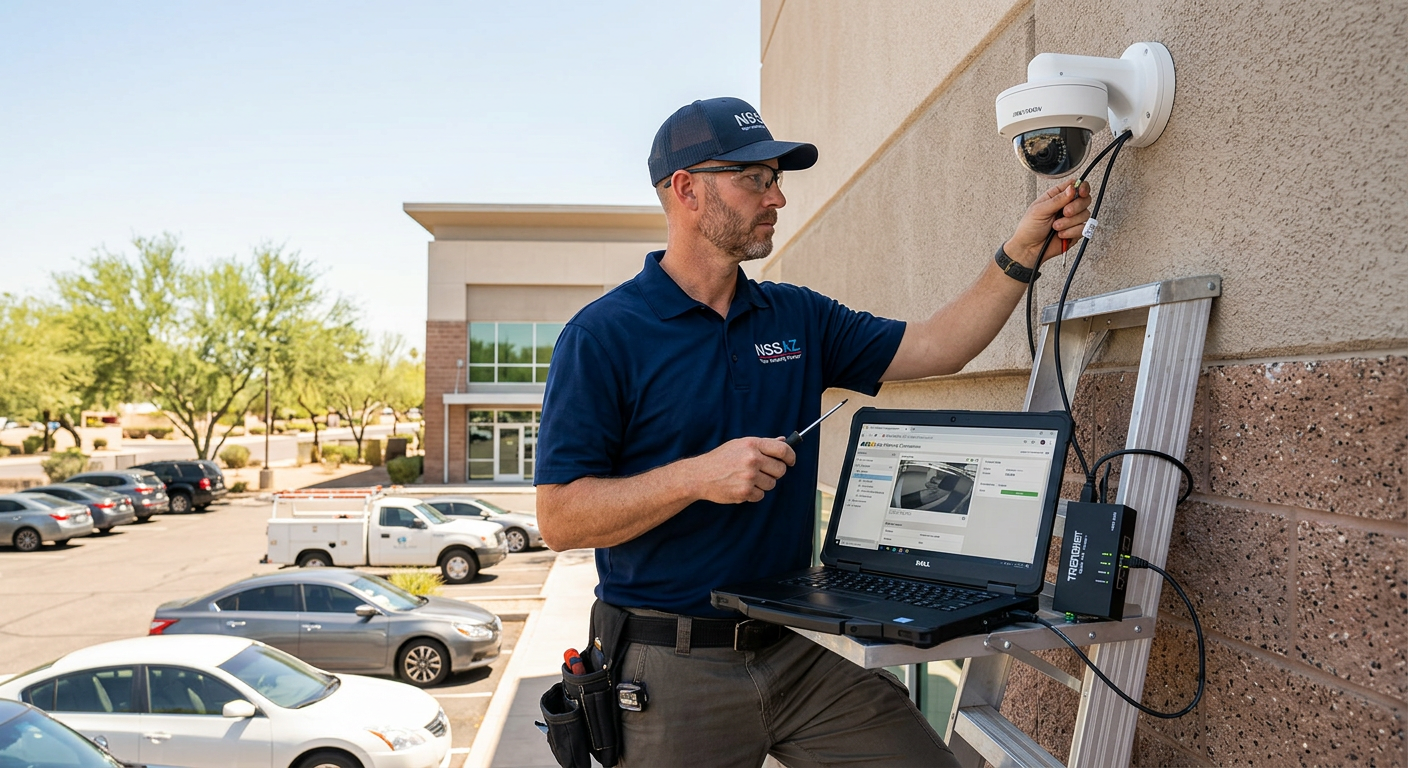
A surveillance system is only as reliable as the network it runs on. Partnering with a local MSP helps ensure your cameras, servers, firewalls, and phones all work together. NSSAZ provides end-to-end support from camera selection and installation to network security and backups, connecting video systems with your managed IT stack and business VoIP phone systems.
Installation best practices for small and mid-size businesses
- Map camera locations with sightlines and lighting in mind before ordering hardware.
- Use tamper-resistant mounts and conceal cabling where possible.
- Configure role-based access, secure remote access with multi-factor authentication, and maintain an audit trail.
- Routine maintenance, like lens cleaning and firmware updates, prevents blind spots and security vulnerabilities.
Cost considerations and ROI
Initial costs include cameras, cabling, mounts, NVR or cloud subscriptions, and professional labor. Factor long-term savings from reduced shrink, lower insurance premiums, and fewer security incidents. For many Arizona businesses, managed installation and support reduces downtime and delivers predictable monthly costs.
Why choose a local Phoenix and Lake Havasu City provider
Local providers understand municipal rules, climates, and common threat patterns in Phoenix and Tempe. NSSAZ is family-owned, with offices in Lake Havasu City and Tempe/Phoenix, offering hands-on service, fast onsite response, and expertise across managed IT, video surveillance, and business communications. If you want a single partner for cameras, network security, and VoIP, NSSAZ is built for that.
Frequently Asked Questions
How much does a business security camera installation in Phoenix typically cost?
Costs vary by camera count, resolution, mounting complexity, and storage choice. A baseline budget for a small office starts with a few thousand dollars for equipment and professional installation, while larger retail or dealership setups rise accordingly. Managed service plans spread costs over time.
Can video surveillance integrate with my existing phone system or alarms?
Yes, modern systems can integrate with VoIP phone systems for alerts, and with alarm platforms for synchronized incident responses. Integrations improve response times and centralize event management.
What retention period should my business use for footage?
Retention depends on your risk profile and any regulatory needs. Many businesses keep 30 to 90 days as a baseline, while healthcare or legal practices may need longer. Your MSP can design storage policies that balance cost and compliance.
Does weather in Phoenix affect camera choice?
Absolutely. Choose outdoor-rated cameras with heat-tolerant components, dust sealing, and sun shields. Proper placement out of direct midday sun extends camera life and image quality.
Do I need a managed IT partner to maintain my surveillance system?
You do not strictly need one, but a managed partner reduces downtime, ensures secure remote access, handles backups, and keeps firmware up to date. For many small and mid-size businesses, this saves time and reduces risk.
Ready to secure your business in Phoenix and Lake Havasu City?
Talk to NSSAZ about a tailored security camera plan that ties into your network, backups, and phone systems. Request a free consultation or schedule a site survey to get a clear estimate and timeline. Visit our video surveillance page for details on solutions, or contact us today to get started.
- Learn more about our video surveillance solutions: video surveillance for businesses
- See our managed IT services and network security options: managed IT services
- Ask about integrated VoIP phone systems: business VoIP phone systems
- Ready to talk? Contact NSSAZ or call Lake Havasu: (928) 855-9088, Tempe/Phoenix: (480) 569-6897
Conclusion
Installing the right security camera system in Phoenix reduces risk, strengthens compliance, and gives you peace of mind. Start with clear goals, choose hardware built for local conditions, and connect your cameras to a secure, managed network. With a local, family-owned partner like NSSAZ you get full-service support across surveillance, managed IT, backups, and communications, all tailored to Arizona businesses.