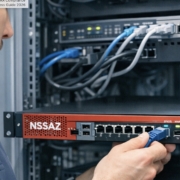
Hipaa Compliant IT Services Arizona: Secure Managed IT Solutions

Hipaa Compliant IT Services Arizona: Secure Managed IT Solutions
Keeping protected health information safe takes more than good intentions, it requires systems, policies, and ongoing monitoring tuned for healthcare workflows. For Arizona practices and clinics, getting HIPAA right means pairing technical safeguards with local, responsive support that understands how your office actually operates.
At NSSAZ we help healthcare and regulated businesses with practical, hipaa compliant it services arizona that combine managed IT, secure backups, and compliance consulting so you can focus on patients, not paperwork.

Why HIPAA compliance matters for Arizona businesses
HIPAA protects electronic protected health information, or ePHI. Federal rules require covered entities and business associates to ensure confidentiality, integrity, and availability of ePHI by implementing administrative, physical, and technical safeguards. Arizona providers and any business that handles patient data are responsible for meeting these standards, responding to breaches, and documenting their security practices.
Recent federal guidance and cybersecurity resources, including the HHS Security Rule overview and NIST SP 800-66 implementation guide, emphasize risk assessments, strong access controls, encryption, and tested incident response plans. These are the same areas a local MSP should help you manage and document.
What HIPAA-compliant IT services look like in Arizona
Administrative safeguards
- Regular risk assessments and documented security plans, tailored to your practice size.
- Workforce training on PHI handling and breach reporting.
- Clear business associate agreements for any vendor that accesses ePHI.
Physical safeguards
- Secure server and device storage, controlled access to server rooms and workstations.
- Policies for device disposal and portable media.
Technical safeguards
- Access controls and unique user IDs with role-based permissions.
- Multi-factor authentication for remote and privileged access.
- Encryption of data at rest and in transit where feasible.
- Audit logs and continuous monitoring to detect suspicious activity.
- Robust backups with offsite encrypted copies and tested recovery procedures.
How an Arizona MSP (managed service provider) helps you stay compliant
Here is what to expect when you outsource HIPAA compliance tasks to a local MSP like NSSAZ:
- Ongoing risk assessments and remediation plans that match your operations, not cookie-cutter checklists.
- Endpoint management and patching to reduce vulnerabilities across desktops, laptops, and servers.
- Managed backups and Business Continuity / Disaster Recovery (BCDR) planning with regular restore testing.
- Network security including firewalls, intrusion detection, and secure VPNs for remote access.
- Vendor management and help creating Business Associate Agreements where needed.
- Incident response playbooks and support during breach investigations and notifications.
Learn more about our managed IT services and how we support healthcare clients at NSSAZ by visiting our managed IT services page.
Practical checklist: 10 items your HIPAA IT program should cover today
- Conduct a documented risk assessment within the past 12 months.
- Maintain written policies for security, breach response, and data retention.
- Enforce multi-factor authentication for remote and administrative access.
- Encrypt sensitive data in transit and at rest where technically feasible.
- Keep all systems patched and use endpoint protection with centralized monitoring.
- Implement role-based access control and review user access quarterly.
- Maintain secure, encrypted backups offsite and test recoveries regularly.
- Train staff annually on HIPAA privacy and security responsibilities.
- Execute Business Associate Agreements with all vendors handling ePHI.
- Document incidents, mitigations, and follow-up actions for audit trails.
Common HIPAA questions for Arizona practices
Can my practice use cloud EHR systems and still be HIPAA compliant?
Yes, but you must ensure the cloud provider signs a Business Associate Agreement, supports encryption, and provides audit logs and security controls that meet the Security Rule. Many cloud EHR vendors do this by default, but you still need to document your due diligence.
Does VoIP or telehealth count as ePHI and need extra safeguards?
If the communication contains patient-identifiable information, it is treated as ePHI. Secure VoIP deployments must use encrypted signaling and media, authenticated user access, and vendor BAAs where applicable. Our business VoIP phone systems services include secure configurations for healthcare environments.
How often should we perform risk assessments?
At minimum annually, and whenever you introduce new systems, significant workforce changes occur, or you add third-party services that handle ePHI.
What happens if we suffer a ransomware attack?
You must follow your incident response plan, contain the incident, assess ePHI exposure, notify affected individuals and HHS OCR if required, and document all steps. Having encrypted backups and tested recovery plans significantly reduces downtime and breach impact.
Local advantages: why choose an Arizona-based MSP
Working with a local MSP in Lake Havasu City or Phoenix gives you faster onsite response, knowledge of local regulatory expectations, and a partner who understands how small to mid-size Arizona practices operate. NSSAZ combines over 70 years of combined IT experience with hands-on, local support to keep your practice running and compliant.
We provide integrated services including secure managed IT, business VoIP systems, and video surveillance for clinics that need physical security solutions that align with privacy rules. See our VoIP phone services and video surveillance pages for technical details and examples.
How to prioritize remediation without breaking the budget
Start with items that reduce the highest risk to ePHI: patching and endpoint protection, secure backups and recovery testing, multi-factor authentication, and access reviews. Use phased investments tied to measurable risk reduction. An MSP can help you create a prioritized roadmap that fits your budget and compliance timeline.
Get HIPAA help from a local Arizona MSP
Ready to reduce your compliance burden and secure patient data? Request a free IT consultation with NSSAZ. We will review your current controls, outline a prioritized remediation plan, and help implement manageable, documented safeguards.
Contact us at https://nssaz.com/contact-us/ or call our local offices: Lake Havasu: (928) 855-9088, Tempe/Phoenix: (480) 569-6897.
FAQs
What exactly is ePHI and who must protect it?
ePHI is protected health information in electronic form. Covered entities and business associates that create, receive, maintain, or transmit ePHI must protect it under HIPAA.
What is a Business Associate Agreement and why do we need one?
A BAA is a written agreement that binds vendors who handle ePHI to HIPAA-required safeguards and breach notification duties. You must have BAAs with cloud providers, MSPs, and other vendors accessing ePHI.
How does NSSAZ document compliance for audits?
We produce policy templates, risk assessment reports, incident logs, and remediation tracking so your organization has the documentation needed for audits and investigations.
Are there Arizona-specific HIPAA laws we should know?
Arizona follows federal HIPAA rules. If state law imposes stricter privacy protections, those also apply. Your legal counsel can advise on specific state nuances.
How long does it take to become HIPAA-compliant with an MSP?
It depends on the starting point. Small practices with basic systems might reach core compliance in a few months, while larger organizations with legacy systems can take longer. An MSP will propose a timeline after an initial assessment.
Conclusion
HIPAA compliance is an ongoing program, not a one-time project. For Arizona businesses, pairing federal guidance with local, reachable support makes compliance manageable and affordable. NSSAZ brings practical IT controls, tested backup strategies, and on-the-ground support in Lake Havasu City and Tempe/Phoenix so you can protect patient data and keep your practice running.
Request a free consultation today at https://nssaz.com/contact-us/ or call (928) 855-9088 for Lake Havasu or (480) 569-6897 for Tempe/Phoenix.